
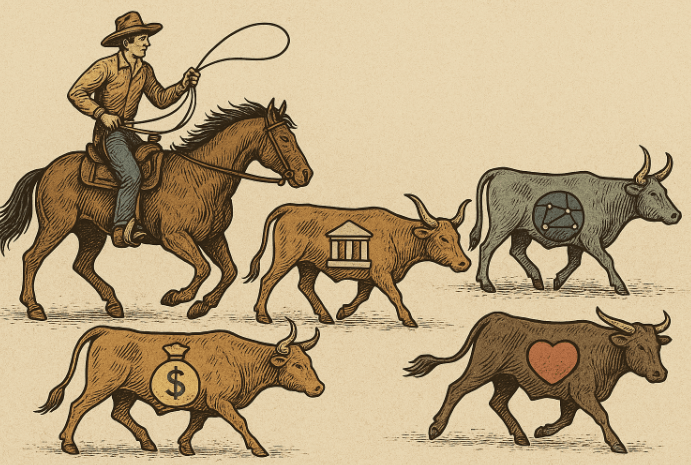
When people talk about Web3 governance or decentralized ecosystems, they often point to DAOs, foundations, or “the community” as the stewards of the network. But real stewardship isn’t about control — it’s about care.
A steward in an open-source ecosystem doesn’t dictate outcomes. They ensure the environment stays healthy enough for others to build, contribute, and evolve freely. In Web3, that role expands: the ecosystem is not only software, but also infrastructure, governance, and an economy. It’s the digital equivalent of tending a frontier — rugged, collaborative, and built for the long haul.
Below is a deep look at the full range of functions that make open-source ecosystems thrive under Web3’s model of decentralized stewardship.
🧭 1. Setting Vision and Long-Term Direction
Stewardship begins with clarity of purpose. A steward defines not only what the ecosystem is building, but why it matters — and how to ensure that purpose persists as the network scales.
In early stages, this means defining a mission and establishing a culture rooted in openness and public good. As the ecosystem matures, it becomes about guarding the ethos while decentralizing operations. That balance between direction and distribution is what separates a strong steward from a centralized operator.
A healthy steward sets the long-term strategy but leaves execution to specialized teams and working groups. The Ethereum Foundation is a prime example: rather than owning the network’s progress, it frames the vision, supports critical gaps, and continually redefines its role as the ecosystem grows.
Strategic stewardship also means preparing for succession — making sure the ecosystem can outlive its founders. The best stewards think in decades, not quarters. They coordinate research, track ecosystem health, and ensure that governance, funding, and development pipelines remain resilient over time.
⚙️ 2. Maintaining Core Infrastructure
Infrastructure stewardship is about ensuring that the commons stay operational, secure, and open.
Every Web3 project relies on invisible scaffolding — code repositories, CI/CD pipelines, testnets, wallets, documentation, and developer tools. The steward’s job is to keep those shared systems running and evolving.
That means coordinating core development teams, reviewing pull requests for protocol updates, managing test environments, and paying for hosting or cloud costs. It also includes funding security audits, vulnerability management programs, and incident response plans.
In a decentralized environment, no one company owns the infrastructure — but someone must ensure it doesn’t collapse under its own weight. Foundations like Web3 Foundation and Interchain Foundation have made this a central duty, ensuring core protocol clients and interoperability layers receive stable, long-term support.
The principle is simple: if the ecosystem depends on it, the steward is responsible for it.
🏛️ 3. Building Governance and Standards
Good governance is the operating system of decentralization. A steward defines the rules of engagement: who decides what, how proposals are evaluated, and how conflicts are resolved.
In open-source, this often takes the form of governance frameworks — technical steering committees, working groups, or on-chain referenda systems. The steward’s task is to keep these systems transparent and accountable without dominating them.
They also manage standards and specifications — the protocols that ensure everything built in the ecosystem remains interoperable. For example, defining token or API standards, upgrade paths, and communication processes between modules.
Governance stewardship is not about winning arguments; it’s about designing the processes that allow others to make legitimate decisions. It’s setting up the town hall, not owning the town.
💰 4. Managing Funding and Sustainability
In open source, “free” never meant “without cost.” Infrastructure, audits, education, and contributor time all have price tags. A steward’s most visible and often misunderstood function is ensuring that those costs are covered — ethically, transparently, and sustainably.
Funding stewardship starts with treasury management: maintaining transparent budgets, audits, and expense policies. It includes administering grants for new projects, bug bounties, or community initiatives, and ensuring fair criteria for selection.
In Web3, this may involve managing token treasuries, delegating voting power to funding committees, or experimenting with quadratic funding and retroactive public goods funding.
Long-term sustainability requires foresight: the steward must prevent overreliance on one revenue stream (like token price) and explore diversified models — endowments, community fees, or partnerships.
The steward’s north star is to make sure open-source contributors are rewarded, not exploited, and that ecosystem funding is predictable enough to maintain public goods for generations.
🧑💻 5. Coordinating Contributors and Builders
Web3 ecosystems don’t have org charts — they have networks. And those networks need coordination.
Stewards act as connectors between independent teams, ensuring alignment on core milestones, releases, and compatibility standards. They sponsor hackathons, manage developer portals, fund educational content, and track contribution health through analytics.
They also maintain onboarding programs and mentorship paths to turn new contributors into regular participants. The steward helps establish documentation standards, developer relations practices, and community norms for contribution.
This function is cultural as much as operational: it ensures that contributors feel seen, supported, and empowered. A steward doesn’t lead every team — it makes sure every team can lead itself.
⚖️ 6. Handling Legal, Compliance, and Policy
In a Web3 landscape still negotiating its regulatory identity, legal stewardship is essential.
A formal steward gives the ecosystem a legal entity that can own trademarks, sign contracts, and hold assets on behalf of the community. It’s the interface between a decentralized network and the centralized legal world.
Stewards manage intellectual property (trademarks, licenses, and brand assets), ensuring software remains open while preventing misuse. They provide contributor license agreements, model contracts, and compliance policies.
They also liaise with regulators and policymakers — explaining open-source governance structures and advocating for fair treatment of decentralized technologies. Under the EU’s Cyber Resilience Act, for instance, open-source “stewards” are now recognized as responsible entities for vulnerability reporting and compliance — a clear sign of their growing importance.
In essence, stewards shield contributors from legal uncertainty while protecting the community’s shared identity.
🌐 7. Fostering Partnerships and External Engagement
No ecosystem grows in isolation. A steward’s outreach function ensures that what’s built internally is understood, adopted, and supported externally.
This includes forging relationships with enterprises, research institutions, standards bodies, and other blockchain ecosystems. Stewards often represent the ecosystem in public events, regulatory hearings, or industry roundtables, translating between technical vision and institutional language.
They publish reports, organize educational events, and maintain partnerships that expand adoption and credibility.
A good steward doesn’t chase attention; it builds alignment — between builders and regulators, between open-source communities and enterprise adopters, between innovation and responsibility.
❤️ 8. Nurturing Community Health
Every open-source ecosystem lives or dies by the health of its people. A steward’s most human responsibility is to make sure those people can thrive.
That means creating inclusive spaces, offering recognition and support, and protecting the community from burnout, toxicity, or exclusion. Stewards maintain codes of conduct, enforce norms of collaboration, and mediate disputes before they fracture the ecosystem.
They also track community health — measuring contributor activity, diversity, and project maturity. Healthy ecosystems are diverse ecosystems: a mix of veterans and newcomers, companies and independents, core and peripheral projects.
Stewardship at this level is about empathy at scale — making sure that open source remains not just open, but welcoming.
🪙 The Steward’s Code: Neutral, Accountable, Empowering
At its core, stewardship in Web3 is not about ownership. It’s about accountability to a shared future.
The steward’s job is to create systems — legal, technical, and cultural — that allow others to lead responsibly. To ensure that governance remains fair, funding remains transparent, and innovation remains inclusive.
In an age where open source underpins the global economy and blockchain ecosystems experiment with self-governance, stewards are the connective tissue — the unseen hands that keep the system functional, credible, and human.
Because without stewardship, decentralization becomes disarray. But with it, open ecosystems can evolve, adapt, and endure — long after their founders ride off into the sunset.
Appendix: Sources
- OpenSSF Blog – OSS and the CRA: Am I a Manufacturer or a Steward? (2025)
- Rust Foundation – Joint Statement on Sustainable Open Source Stewardship (2025)
- Sonatype Blog – From Abuse to Alignment: Why We Need Sustainable Open Source Infrastructure (2025)
- Ethereum Foundation – Our Role: Doing What Others Can’t, Until They Can
- Web3 Foundation – Open Grants Program Overview
- Interchain Foundation – Governance and IBC Standards Framework
- Open Infrastructure Initiative – Statement on Sustainable Stewardship for Shared Infrastructure
- CryptoAltruists – The Role of Web3 Technology in Shaping the Next Era of Open Source Development
- EU Cyber Resilience Act – Article 26, Responsibilities of Open Source Stewards
- Cardano Intersect OSO – Project Incubation Process & Governance Overview
 Open Source Cowboy Consulting
Leave a comment